



Are patients finding your clinic or pharmacy online, or are they going to your competitors?
Many healthcare businesses in the UK struggle to be visible on Google. Nearly 47% of British adults Google their symptoms before visiting a GP (General Practitioner), yet without a smart SEO strategy, your website stays buried while others get noticed.
The solution is a clear, trustworthy healthcare SEO strategy. Optimising your website for the right keywords, improving your local presence, and publishing credible, helpful content can make your clinic or pharmacy the first choice when patients search online.
This guide covers everything about healthcare SEO in the UK, from keyword research and local SEO to technical SEO and link-building, so you can attract more patients and grow your business effectively.
What Is Healthcare SEO — And Why It Matters
Healthcare SEO means improving your online presence, especially your website and Google Business Profile (GBP), so that patients can easily find your services on search engines like Google. It covers everything from keyword research and local listings to website speed and patient reviews.
In the UK, SEO is more important in healthcare than in many other industries. A study by the Office for National Statistics found that over 85% of adults use the internet to look for health-related information before contacting a professional.
That means people often search for health advice online before booking an appointment.
What does SEO for clinics, pharmacies, and hospitals actually mean?
For clinics, SEO means helping potential patients find the right treatments or consultations online.
For pharmacies, it means appearing in local searches when people need prescriptions or over-the-counter advice.
For hospitals, it helps highlight specialist services and build credibility.
How healthcare search behaviour differs
Patients use search terms that reflect their immediate needs. Common phrases include “walk-in clinic near me,” “private GP appointment,” or “pharmacy open late.”
They rarely use complex keywords. This means your SEO strategy should focus on natural, simple language.
Is SEO Important for The UK?
Unlike many countries, the UK has both NHS and private healthcare providers competing for attention.
Private clinics and pharmacies must stand out without breaching advertising or medical claims rules.
An SEO strategy helps you attract patients ethically by improving your visibility in search results rather than through paid ads.
Why SEO delivers long-term value
Pay-per-click campaigns stop the moment you stop paying. SEO continues to bring patients for months or years.
A well-optimised healthcare website builds trust with Google and with people searching for reliable information.
The more helpful your site is, the higher it ranks, and the more appointments you gain.
What challenges make healthcare SEO harder?
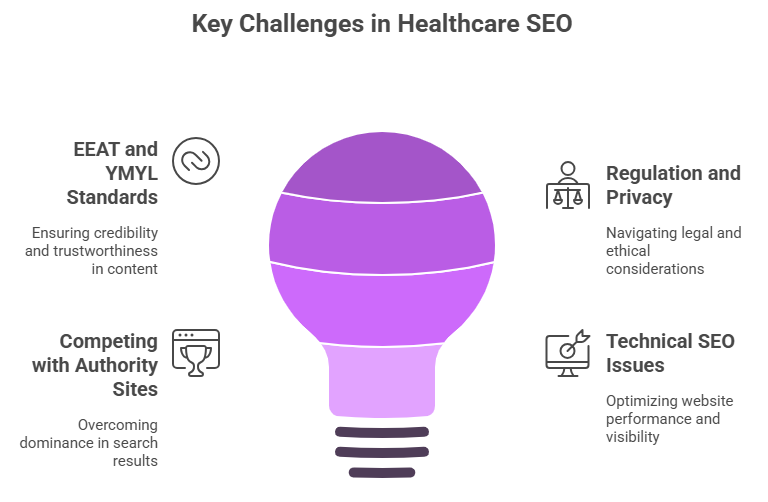
Healthcare SEO is more complex than standard local SEO. The main challenges involve accuracy, compliance, and competition.
1. EEAT and YMYL Standards
Google applies strict rules to healthcare and medicine content because it affects people’s health and well-being. These are known as YMYL (Your Money or Your Life) pages. To rank well, you must show clear EEAT:
- Expertise — content must be written or reviewed by healthcare professionals.
- Experience — real case studies or patient stories help.
- Authority — credentials, trust signals, verifiable staff bios.
- Trustworthiness — up-to-date and accurate information, secure contact forms.
2. Regulation and Privacy
You must follow UK regulations, including General Data Protection Regulation (GDPR) and Advertising Standards Authority (ASA) guidelines. You cannot make unverified medical claims or share patient data carelessly. SEO content must be factual and written responsibly.
3. Competing with authority sites
Large organisations like the NHS, WebMD, and large hospital networks already dominate healthcare search results.
For smaller clinics or independent pharmacies, winning local SEO is the key.
You must focus on specific neighbourhoods, London boroughs, or postcodes, such as “dental clinic Bristol” or “pharmacy in Camden,” where competition is lower but intent is higher.
4. Technical SEO Issues
Many clinic or pharmacy websites are slow, not mobile-friendly, or insecure. These problems hurt your rankings and patient trust.
Google ranks mobile-friendly, secure websites higher. To compete, your website must be fast, secure (HTTPS), and easy to navigate on mobile.
Keyword Research: Finding What Patients Actually Search For
Keyword research is the first step in building visibility. It helps you understand what patients actually search for before they choose a clinic or pharmacy.
Here’s how to do it well for healthcare.
1. Identify your core service keywords.
Start with the primary services you offer.
- If you run a clinic, think about what people type before booking: “private GP London,” “skin specialist Manchester,” or “women’s health clinic Birmingham.”
- If you manage a pharmacy, focus on needs like “prescription refill near me” or “travel vaccine near me.”
Think about what someone types when they want to use your services.
2. Discover Long-Tail and Local Keywords
Long-tail keywords are longer and more specific phrases people use when they are ready to take action.
For example, “private blood test Liverpool” or “chemist open Sunday Leeds.”
Local keywords help you appear in searches near your location. Use your town, postcode, or neighbourhood in your keyword list. It improves map rankings and attracts people nearby who are ready to visit.
3. Use the Right Tools for Research
Tools like Google Keyword Planner, Ahrefs, or Semrush help you see how often people search for each phrase.
You can filter by country or city to find UK-specific results. Look for search terms with a balance between decent traffic and moderate competition.
4. Understanding user intent
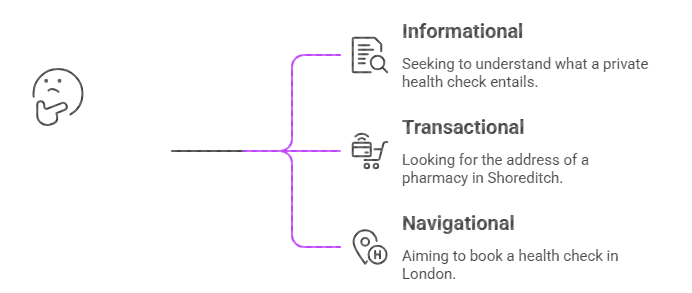
Every search has an intent. Some users want information, others want an appointment. Match your keywords to each stage:
- Informational intent: “What is a private health check?”
- Navigational intent: “Pharmacy Shoreditch EC2 address.”
- Transactional intent: “Book a private health check in London”
Use informational terms for blogs and transactional ones for service pages.
5. Add Secondary Keywords
Include related phrases such as “healthcare SEO guide,” “SEO for private clinic,” or “London pharmacy SEO.” These support your main topics and help Google understand your site’s theme.
What on-page SEO tactics work best for clinics and pharmacies?
Your website forms the first impression of your practice for your patients. On-page SEO ensures a positive impression and that Google can easily understand your pages.
1. Build a Clear Website Structure
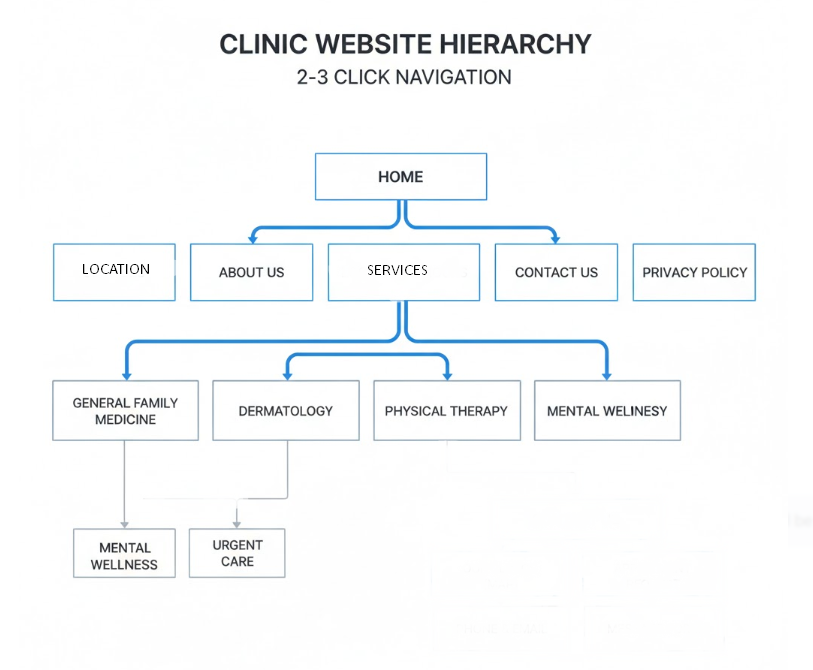
Design your website like a real clinic. Each service should have its own page. Add pages for specialities, FAQs, and location-based information. Keep the structure simple so patients can find what they need in 2 or 3 clicks.
2. Show Your EEAT (Trust & Authority)
Add pages for your doctors, pharmacists, or specialists, each with a short bio and verified credentials. Include patient reviews and case studies that prove real results. These elements show authority and build trust with both visitors and Google.
3. Optimise Titles, Headings & Meta
Include your keywords in:
- Page titles
- Headings
- Meta descriptions
Keep each one clear and focused.
4. Write Patient-Friendly Content
Blogs, guides, and FAQs are influential. Write about topics people search for, like “how to renew a prescription online” or “Why get a private health check?” Use simple language. Explain things plainly. Avoid medical jargon when possible.
5. Internal linking and content grouping
Link related pages together.
- From your “flu jab” service page to a “winter health tips” blog
- From a “skin clinic” page to “eczema treatment” content
This helps Google understand your site’s structure and keeps visitors exploring longer.
How do you improve local SEO and show up on Google Maps?
Why local search matters
More than half of all healthcare-related searches in the UK have local intent. That means users want a nearby option, not general advice.
Local SEO helps people around you find your pharmacy. When someone searches “clinic near me” or “pharmacy open now,” Google shows the map results first. If you are not on that map, your competitors get the patients instead of you.
Keep your NAP consistent
Make sure your NAP (Name, Address, and Phone number) is the same everywhere online. That includes your website, Google Business Profile, and local directories. Even slight differences, such as “Rd” versus “Road,” can confuse Google’s systems and lower your ranking.
Optimise your Google Business Profile
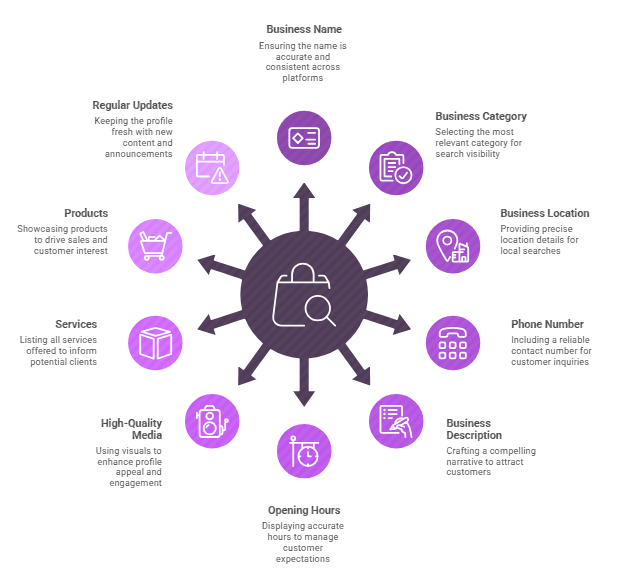
An optimised Google Business Profile can double your chances of showing up in the top three map results.
Add your business’s real name, address, phone, and opening hours. Include your business description using your targeted keywords.
Upload high-quality images and videos of your pharmacy or clinic and staff, add service categories, and post regular updates about new services, health campaigns, or seasonal offers.
Collect and respond to reviews
Positive reviews help both SEO and patient trust. Encourage happy patients to leave honest feedback on Google.
Reply to every review, even the negative ones, politely and professionally. Google notices active engagement and rewards it with better visibility.
Target local keywords
Use your city, borough, or postcode in your content and metadata.
Add location-based pages if you have multiple branches. Each location page should include an embedded map, contact info, and local landmarks.
Get Listed in Trusted UK Healthcare Directories
Examples:
- TopDoctors UK
- Bupa Finder
- Local London medical directories
These “citations” help Google verify your business details and improve your authority.
How Do You Improve the Technical SEO of Your Healthcare Website?
Even the best content will struggle to rank if your website’s technical side is weak. Technical SEO is the backbone that supports your visibility, speed, and user experience.
Ensure your site is secure and mobile-friendly
Every website should use HTTPS encryption. Patients share sensitive information, and Google prefers secure sites. Mobile traffic now accounts for most UK healthcare searches, so your website must be responsive and load quickly.
Add schema markup
Schema tells Google what your content means, not just what it says. Use MedicalBusiness, Physician, and LocalBusiness schema types to describe your services, staff, and contact info. This increases your chances of appearing in rich results, such as FAQs or review snippets.
Avoid duplicate and thin content
If you operate several clinics, avoid copying the exact text across each location page.
Rewrite unique content for every branch. Thin content, like single paragraph pages, signals low quality. Expand those pages with detailed information on treatments, pricing, and directions.
Upload high-quality images and videos of your pharmacy or clinic and staff, add service categories, and post regular updates about new services, health campaigns, or seasonal offers.
Monitor crawl and performance errors
Check your Google Search Console regularly for crawl issues or broken URLs.
Optimise images and remove large files that slow the site. Core Web Vitals, such as loading speed and interaction time, directly affect your search position.
Use hreflang and canonical tags correctly
If your site targets multiple regions or languages, hreflang tags help Google show the correct version to users.
Canonical tags prevent duplicate content problems when similar pages exist. These small technical details keep your SEO clean and organised.
How do content marketing and backlinks improve healthcare SEO?
If you want long-term growth and to build trust, you need a content-driven and link-building strategy.
Create Helpful and Patient-Focused Content
Write blogs and guides that directly answer what patients search for:
- “How to book a private GP visit in London”
- “What to know about ordering prescriptions online”
- “After-care advice for minor surgery”
Keep your tone conversational. Use local and straightforward language.
Use semantic keywords and NLP terms
Add phrases that reflect real patient concerns:
- “Patient journey”
- “Recovery steps”
- “Treatment options”
- “Follow-up care”
These help Google understand your content contextually, improving your rankings for multiple related queries.
Earn Quality Backlinks
High-quality backlinks act as votes of confidence for your website. Reach out to UK medical associations, local healthcare blogs, UK health directories, and professional organisations.
A link from a trusted site, such as the NHS or a university hospital, can significantly improve your search visibility.
Leverage Digital PR
Publish press releases about new services, health initiatives, or seasonal campaigns. Share stories of patient impact or community outreach.
Engage with local news outlets and healthcare blogs. This builds authority while generating links and brand recognition.
Guest articles and partnerships
Collaborate with relevant healthcare organisations, industry blogs, or patient-focused websites. Guest posts can introduce your clinic or pharmacy to a broader audience and generate valuable backlinks.
How should you measure and improve your healthcare SEO performance?
You must track progress. Without tracking, you cannot know which strategies are working or which need adjustment.
Focus on the Right Metrics
Track what matters to patient acquisition
- Organic traffic (visitors from Google)
- Keyword rankings (especially local terms)
- Conversion actions (booking forms, calls)
- Egagement (bounce rate, time on page)
Set Clear Goals
Compare data month over month. Year over year. Aim for steady growth:
- More local visibility in GBP
- Higher service-page enquiries
- Better blog engagement
Use the right tools
Google Analytics 4 and Google Search Console are essential. They show where visitors come from, which keywords drive traffic, and how people interact with your site.
UK-specific search trends can be checked via Statista, NHS Digital, or Google Trends UK.
Audit and Refresh Regularly
SEO is not static. Review your site quarterly for outdated content, broken links, and technical errors.
Refresh blog posts and service pages to reflect current medical advice and UK regulations.
Continuous improvement keeps your rankings stable and patient traffic growing.
What new healthcare SEO trends should UK clinics and pharmacies follow?
Healthcare SEO is constantly evolving. Staying ahead of trends ensures your clinic or pharmacy continues to attract patients.
Voice search and conversational queries
More patients use voice assistants such as Siri, Alexa, or the Google Assistant.
Queries such as “which nearest pharmacy is open now in London?” or “which private clinic is the best for skin treatment in Manchester?” are on the rise.
Optimising for natural, conversational phrases helps capture these searches.
AI search assistants and semantic search
Google now understands intent and context better. Content that clearly explains “what you do, how patients benefit, and next steps” ranks better.
Mobile-first and video content
Mobile searches dominate healthcare queries. Sites must load quickly and be easy to navigate on phones.
Video content, such as short clips explaining procedures or pharmacy services, can increase engagement and improve SEO signals.
Hyper-local targeting
Patients increasingly search by postcode, neighbourhood, or landmark. Creating location-specific landing pages with local keywords can capture these hyper-local searches. This is crucial for clinics and pharmacies competing in crowded areas.
Patient expectations for transparency
Patients value reviews, clear service descriptions, pricing information, and interactive features like online booking or chatbots. Meeting these expectations boosts trust and SEO performance.
Strategy for clinics & pharmacies: what to do first and why
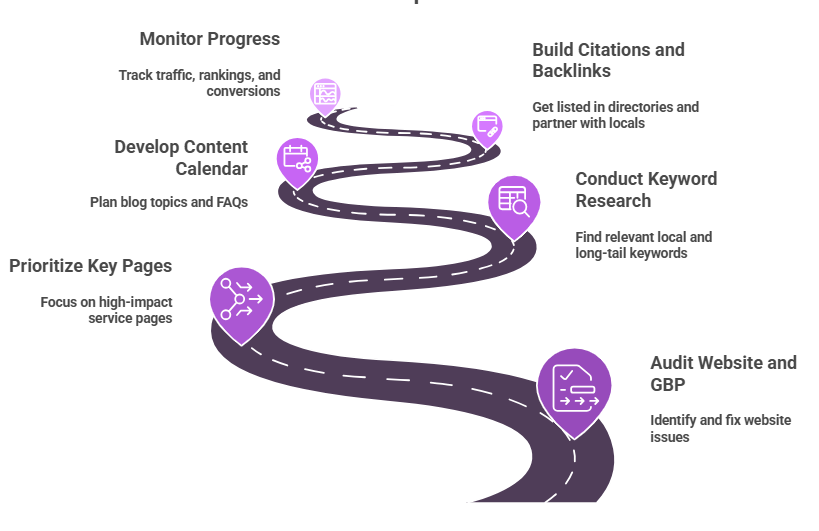
Here is a simple, step-by-step action plan to implement healthcare SEO effectively:
- Audit your current website and local GBP: Identify missing or inconsistent information, fix broken pages, address technical issues, and update outdated content.
- Prioritise your key service pages and location pages: Focus on pages that will drive the most appointments.
- Do keyword research: Find local and long-tail conversational queries. Map those queries to service pages and blog posts.
- Develop a content calendar: Plan 3–6 months of blog topics, FAQs, guides. Include posts around local health concerns or London events.
- Build citations and backlinks: Get listed on trusted UK medical directories. Reach out to local partners and request guest posts.
- Monitor progress: Set up Google Analytics and Google Search Console. Track traffic, rankings, and conversions quarterly.
This step-by-step approach ensures your clinic or pharmacy sees measurable results while maintaining compliance and trustworthiness.
Ready to grow your clinic or pharmacy with expert SEO?
Patients are searching for your services right now. If they cannot find you, they go to your competitors.
Healthcare SEO fixes that. Optimise your website. Improve local listings. Create helpful content. Build trusted backlinks. Each step brings more patients to your door.
And if you need help doing these things, don’t worry. We ensure your website builds trust and ranks for the keywords that bring patients.
Contact CrazyGraph for a free audit and a personalised SEO plan. Let us help your clinic or pharmacy reach the patients who need you most.