

I’ll be honest with you — healthcare content marketing keeps me up at night. Not because it’s impossible, but because I’ve seen too many well-meaning practices get it spectacularly wrong. One pharmacy client came to me after receiving a stern warning from the GPhC about their blog content. Another clinic had their Google Ads account suspended for making claims they couldn’t substantiate.
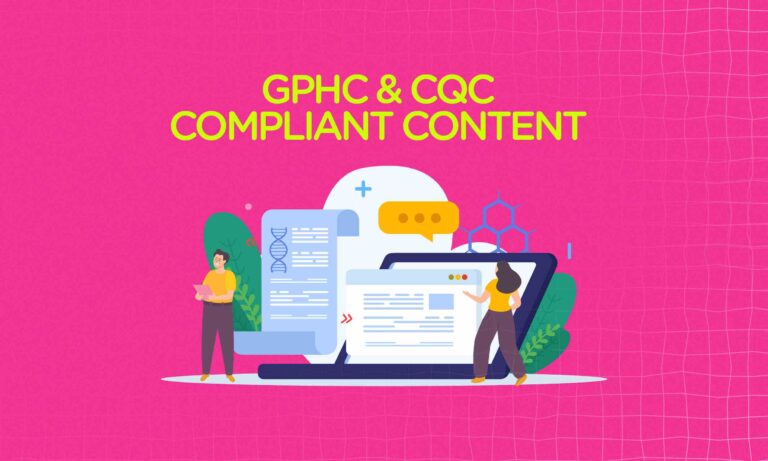
The regulatory tightrope in UK healthcare is real. You need content that brings in patients, but you can’t cross the line into non-compliance.
Here’s what you’ll learn:
- Why standard marketing tactics fail in regulated healthcare environments
- Specific GPhC and CQC requirements that affect your content
- How to write compelling copy within strict regulatory boundaries
- Ways to build trust and convert readers without making prohibited claims
- Practical techniques I use to keep healthcare content both compliant and effective
The Healthcare Content Problem Nobody Talks About
Most marketing advice tells you to be bold. Make promises. Stand out from competitors.
In healthcare, that advice will get you in trouble.
I learned this the hard way when I started working with medical clients. My background was in tech and ecommerce, where aggressive marketing was the norm. My first healthcare campaign included phrases like “guaranteed results” and “the best treatment available.”
The compliance review came back covered in red marks.
Healthcare operates under Your Money or Your Life (YMYL) criteria. Google scrutinizes medical content more heavily than almost any other category. The General Pharmaceutical Council and Care Quality Commission add another layer of oversight specific to UK providers.
You’re not just competing for rankings. You’re competing for rankings while wearing regulatory handcuffs.
The good news? Most of your competitors struggle with this, too. If you master compliant content creation, you gain a substantial advantage.
What GPhC Actually Requires From Your Content
The GPhC standards aren’t suggestions. They’re legal requirements backed by enforcement action.
I keep their guidance document open whenever I write for pharmacy clients. Here’s what matters most:
You cannot make unsubstantiated claims. Every benefit you mention must have evidence behind it. “May help reduce symptoms” is acceptable if you can cite research. “Cures back pain” is not.
Prescription medication advertising is heavily restricted. You can educate patients about conditions. You cannot promote specific prescription treatments to the public. This trips up many pharmacy blogs that cross from education into promotion.
Patient confidentiality applies to all content. Case studies and testimonials need proper anonymization or explicit written consent. I’ve seen pharmacies share “success stories” that violated privacy regulations without realizing it.
The language matters tremendously. I replace absolute statements with conditional ones:
- Instead of “This will improve your health,” write “This approach has shown positive results in clinical studies”
- Replace “guaranteed to work” with “has demonstrated effectiveness in reducing symptoms”
- Change “the best treatment” to “one recommended option for managing this condition”
Small word choices make huge compliance differences.
CQC Standards That Impact Your Marketing
The Care Quality Commission focuses on patient safety and quality of care. Their standards extend to how you communicate with patients, including marketing content.
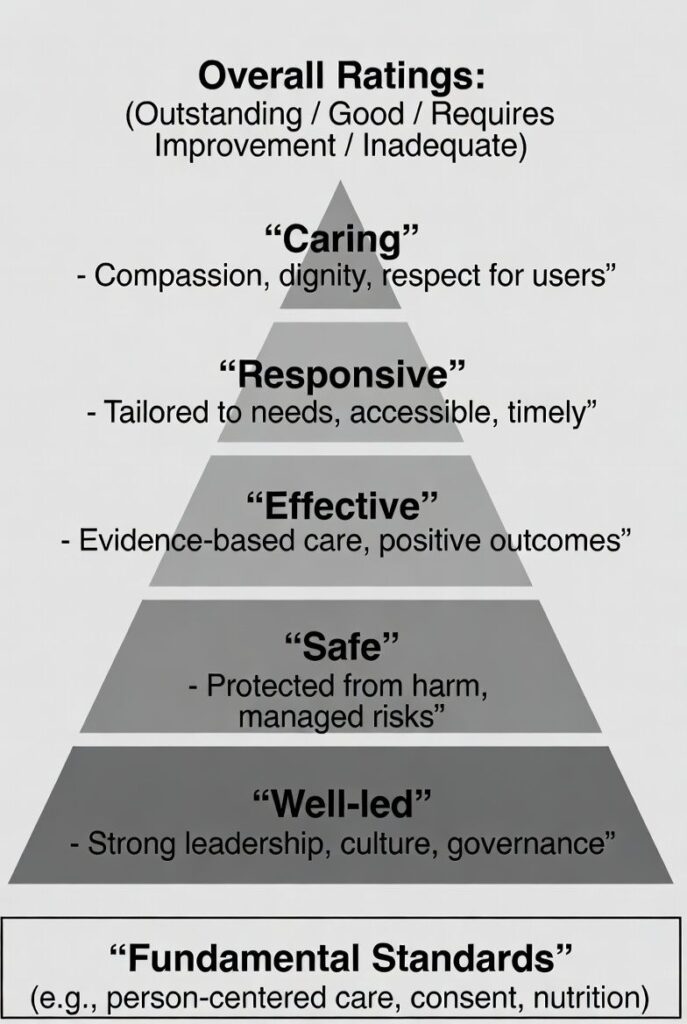
Truthfulness is non-negotiable. You cannot exaggerate your services, qualifications, or outcomes. I advise clients to under-promise and over-deliver rather than risk misleading patients.
Information must be evidence-based. When you explain treatment options or health conditions, accuracy matters more than engagement. I cite sources for medical information—usually NHS content, NICE guidelines, or peer-reviewed research.
Accessibility requirements apply. Your content needs to be understandable to average readers. Medical jargon should be explained or avoided. I aim for a reading level that matches my audience without being condescending.
The CQC also expects you to protect patient data in your analytics and tracking. Cookie consent isn’t optional. I set up healthcare-specific local SEO strategies with privacy considerations built in from the start.
Writing Compelling Content Within Compliance Boundaries
This is where most healthcare marketers give up. They think compliance means boring content.
I disagree entirely.
My most successful healthcare campaigns balance regulation with engagement. You can write compelling copy without crossing legal lines.

Start with patient problems, not your solutions. A blog titled “Understanding Chronic Pain: What Your Doctor Might Not Tell You” attracts readers better than “Our Pain Management Services.” The first educates. The second sells. Both can convert, but education builds trust first.
Use storytelling without violating privacy. Instead of specific patient testimonials, I write about composite scenarios: “Many patients I’ve worked with experience similar concerns when starting this medication.” It’s relatable without being identifiable.
Replace superlatives with specifics. Don’t say you’re “the leading clinic in London.” Say “I’ve treated over 2,000 patients in the past five years.” Numbers are verifiable. Vague claims of superiority are not.
I structure content to guide readers toward conversion without pressure:
First, I acknowledge their concern or question. Then I provide educational information with proper citations. Next, I explain how my services address that need. Finally, I offer a clear next step—usually booking a consultation or calling for advice.
The funnel exists, but it flows naturally through the content.
The Language of Compliant Healthcare Marketing
Certain words and phrases raise red flags with regulators. I’ve built a mental list over the years of writing healthcare content.
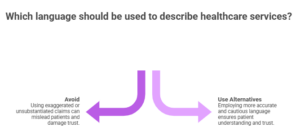
Avoid these completely:
- Cure (unless referring to officially cured diseases)
- Guarantee or guaranteed
- Miracle, revolutionary, breakthrough (unless citing peer-reviewed research)
- The best, number one, leading (unless substantiated)
- Safe or completely safe (all treatments have some risk)
Use these alternatives:
- “May help” instead of “will fix”
- “Clinically shown” instead of “proven”
- “One effective option” instead of “the best solution”
- “Generally well-tolerated” instead of “perfectly safe”
- “Recommended by medical professionals” instead of “doctor approved”
Qualifiers are your friends. Words like “some,” “many,” “often,” and “generally” provide necessary nuance. They acknowledge that individual results vary, which is both compliant and honest.
I also include disclaimers where appropriate. Not lengthy legal text that nobody reads, but brief clarifications: “This information is for educational purposes and doesn’t replace medical advice from your doctor.”
Building Trust Through Transparent Content
Healthcare consumers are increasingly skeptical. They’ve been burned by misinformation and aggressive marketing.
Transparency builds the trust that converts.
I display credentials prominently. If you’re GPhC registered, show your registration number. If staff have specialized qualifications, mention them. Patients want to know they’re getting advice from qualified professionals.
Show your sources. When I reference research or statistics, I link to the original source. This does two things: It proves you’re not making things up, and it helps your content rank better. Google rewards well-sourced medical content.
Admit what you don’t know. If a question falls outside your specialty, say so and refer patients to appropriate resources. This honesty builds credibility faster than pretending to be an expert on everything.
Update content regularly. Medical information changes. Guidelines shift. I add publication and update dates to all healthcare content. It signals that information is current and reliable.
I’ve found that being upfront about limitations actually increases conversion rates. Patients appreciate honesty. They’re tired of overpromising marketing.
Converting Readers Without Crossing Lines
Conversion optimization in healthcare requires subtlety.
My calls-to-action are invitations, not commands. Instead of “Book your appointment now!” I write “Ready to discuss your options? I’m here to help.”
Position consultations as educational. Frame initial appointments as opportunities for patients to ask questions and learn about their options. This removes pressure and emphasizes informed decision-making.
Use soft urgency when appropriate. Some health issues genuinely require prompt attention. You can encourage action without fearmongering: “Early intervention often leads to better outcomes. Let’s talk about what’s right for you.”
Remove friction from the conversion process. Make it easy to contact you. I include phone numbers, email addresses, and contact forms on every service page. Multiple contact options accommodate different patient preferences.
Social proof works in healthcare, but it requires careful handling. I use aggregate data instead of individual testimonials: “I’ve helped over 500 patients manage their diabetes effectively” rather than “Sarah lost 20 pounds and says I’m amazing.”
Patient reviews on Google and other platforms provide third-party validation. I encourage satisfied patients to leave reviews while being careful not to incentivize them. Authentic feedback builds trust without compliance risks.
Technical Optimization for Healthcare Content
Your content needs to be found before it can convert. Healthcare SEO has unique challenges.
Local optimization matters tremendously. Most patients search for nearby providers. I optimize for location-specific terms: “dermatologist in Camden” rather than just “dermatologist.”
Schema markup helps search engines understand your content. I use Medical Business schema for organization pages and FAQPage schema for Q&A content. This can improve visibility in search results.
Mobile optimization is mandatory. Over 60% of health searches happen on mobile devices. If your content isn’t mobile-friendly, you’re losing more than half your potential patients.
Page speed affects both rankings and user experience. Healthcare consumers are often stressed or in discomfort. A slow-loading page adds to their frustration. I compress images, use caching, and minimize code to keep load times under three seconds.
For broader healthcare digital strategies, I always recommend starting with solid SEO foundations that support all your content efforts.
Content Formats That Work for Healthcare Providers
Different content types serve different purposes in your marketing mix.
Educational blog posts answer common patient questions. These attract organic search traffic and establish your expertise. I write comprehensive guides on conditions you treat, symptoms patients should watch for, and treatment options available.
Service pages need different optimization. These are commercial content—patients already know they need services and are evaluating providers. I focus on credentials, process explanations, and what makes your approach different.
FAQ pages are compliance goldmines. You can address patient concerns directly while incorporating conversational search terms. I structure these with clear questions and concise answers, making them perfect for featured snippets.
Video content is growing in healthcare. I recommend short explanatory videos about common procedures or conditions. Keep them under three minutes. Add captions for accessibility. Include the same disclaimers you’d use in written content.
I avoid lengthy patient testimonial videos. They’re difficult to make compliant and often feel staged. Quick facility tours or “meet the team” videos work better.
Measuring Success in Healthcare Content Marketing
You need to track the right metrics.
Traffic matters, but qualified traffic matters more. I care less about total visitors and more about visitors who match your ideal patient profile.

Look at demographics, location data, and which pages attract the most engaged readers.
Conversion metrics to watch:
- Contact form submissions
- Phone calls (use tracking numbers)
- Appointment bookings
- Time spent on service pages
- Pages per session (engagement indicator)
I also track keyword rankings for condition-related and location-based terms. Healthcare rankings fluctuate more than other industries due to algorithm updates targeting medical content. Monitor trends over months, not weeks.
Patient acquisition cost tells you if your content marketing is financially viable. Calculate how much you spend on content creation and promotion, then divide by new patients acquired. This number should decrease over time as your content library grows.
Common Mistakes I See Healthcare Providers Make
After years of fixing other people’s content, I’ve noticed patterns.
Copying competitor content is particularly dangerous in healthcare. If your competitor is non-compliant, you just copied their liability. Write your own content based on proper sources.
Neglecting updates leaves outdated information on your site. Medical guidance changes. Treatment options improve. I schedule quarterly reviews of high-traffic content to ensure accuracy.
Over-explaining services bores readers and dilutes your message. I aim for comprehensive but concise. If something needs 3,000 words, fine. But don’t pad content just to hit a word count.
Ignoring patient privacy in analytics can violate GDPR. I anonymize all patient data and get proper consent for tracking. Cookie consent banners are legally required—make sure yours actually works.
Making comparative claims without evidence invites regulatory problems. Saying you’re better than competitors requires substantiation you probably don’t have. Focus on your own strengths instead.
The Content Compliance Checklist I Use
Before publishing any healthcare content, I run through these checks:
- Are all medical claims supported by credible sources?
- Have I avoided prohibited language (cure, guarantee, etc.)?
- Do I include appropriate disclaimers where needed?
- Are patient privacy standards maintained throughout?
- Have I used conditional language for treatment outcomes?
- Are my credentials and qualifications clearly stated?
- Do images have proper permissions and alt text?
- Are there clear, compliant calls-to-action?
- Have I checked spelling, grammar, and readability?
- Does the content provide genuine value to patients?
This checklist has prevented compliance issues more times than I can count.
Why This Matters for Your Practice
Healthcare content marketing isn’t getting easier. AI-generated content and increased competition make standing out harder.
But compliance creates a moat around your marketing. Most providers won’t invest the time to do it right. They’ll cut corners, risk regulatory action, or give up entirely.
You can be the exception.
When you master compliant content creation, you build sustainable patient acquisition. Your content attracts qualified leads, builds trust, and converts readers into patients—all while keeping you on the right side of regulations.
The GPhC and CQC standards protect patients. They also protect practices willing to work within them. Compliant content is more credible content. Credibility drives conversions.
I’ve seen healthcare providers double their patient inquiries through strategic content marketing. The key isn’t writing more content. It’s about writing the right content correctly.
Start with one high-quality piece. Get it reviewed by someone who understands regulations. Optimize it for search. Promote it appropriately. Measure results. Then repeat the process.
Healthcare content marketing succeeds through consistency and precision, not volume and hype. Focus on helping patients make informed decisions. The conversions follow naturally.
Your practice deserves content that works as hard as you do—without the compliance headaches that come from cutting corners.