

Facebook Ads for Lawyers: Canadian Law Firm Got High Quality Leads

Overview

Substance Law is a Canadian law firm for regulated substances and industries. Their focus includes cannabis, psychedelics, tobacco, vaping, liquor, AGCO, food and drugs, money service businesses, and NFT and crypto.

The firm is based in downtown Toronto, Ontario. It is led by lawyer Harrison Jordan.

Goal

The goal is to get leads at as low a cost as possible. There was no proper restriction or target. But the less we cost for a lead, the better the chance of getting a higher ROAS.

Higher ROAS means an easy way of getting a higher ROI.

Strategy & Planning

Working with law firms to generate leads is both easy and difficult, because the real challenge is bringing in leads that convert. I worked with the creative team to develop direct campaign copy that clearly communicated what clients would receive from us.

The strategy was simple, yet effective.

  • Broad Targeting: Used at the start to collect data, as there was not enough initial data available. Broad targeting also works well early on for most types of campaigns.
  • Specific Targeting: After gathering insights, I tested more specific targeting through separate ad sets. Testing is essential for success in advertising, and refined targeting consistently performs better.
  • Retargeting Audiences: This was essential to re-engage users who may have missed converting earlier. Warm audiences always deliver stronger results.
  • Ad Creative and Ad Set Testing: Multiple creatives and ad sets were tested as standard practice, and this approach proved effective.


    Results

    Campaigns
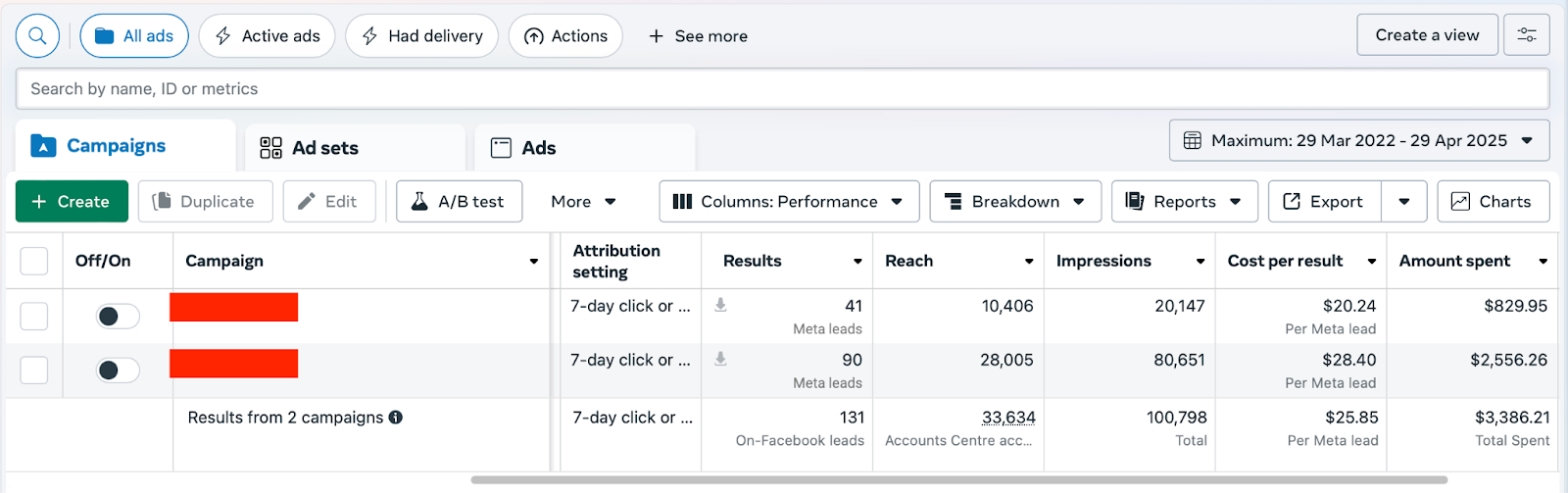
    Campaigns look cool? Right! 

    But the process wasn’t easy. Cause I had to try things to get the cost per lead lower.

    Check the ad sets.

    Ad Sets
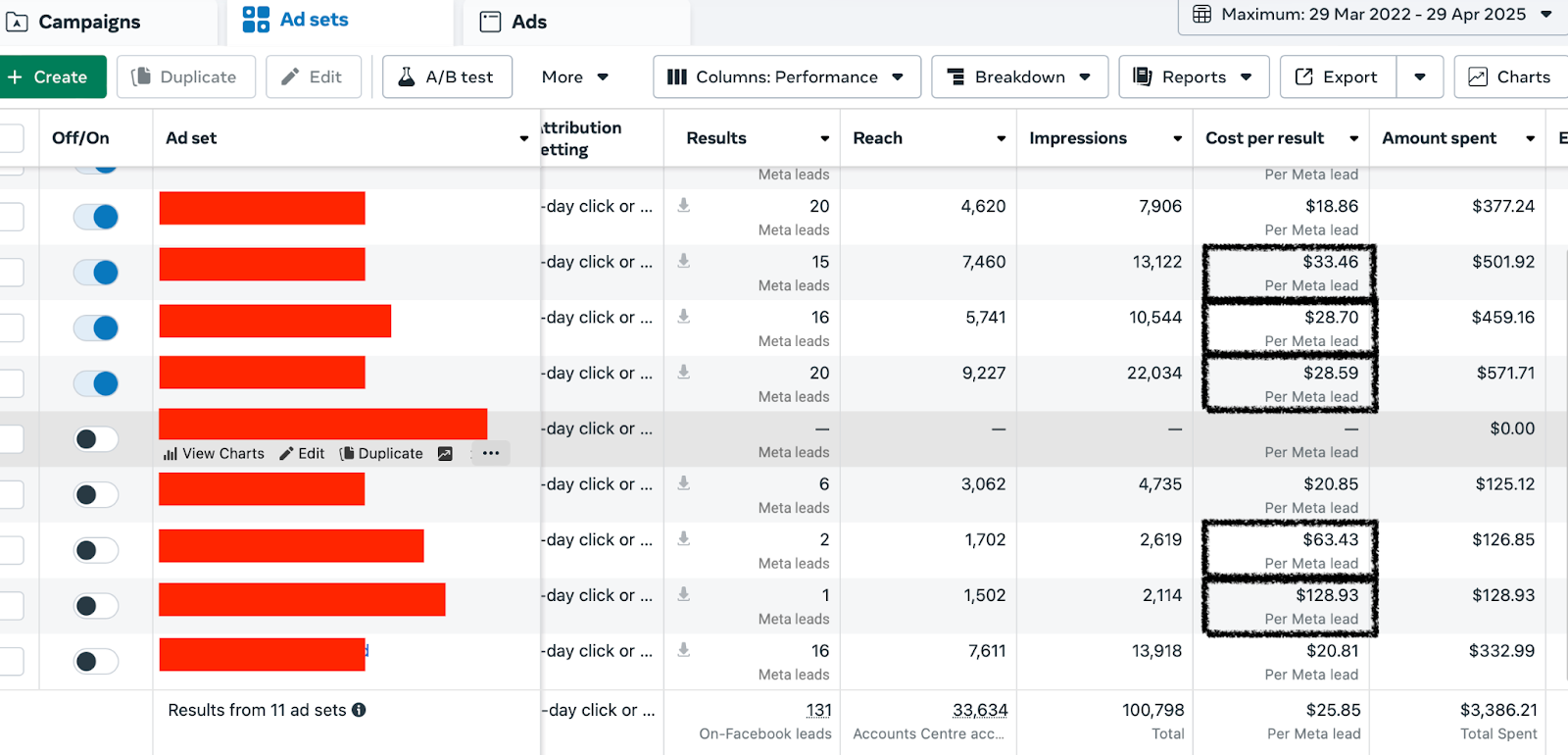
    At first, the cost per lead was higher than usual. Then I had to work on it to lower it, and I successfully did that.

    From $128 & $63 cost per lead to $28 & $20 cost per lead.

    The journey was great.

    Feedback
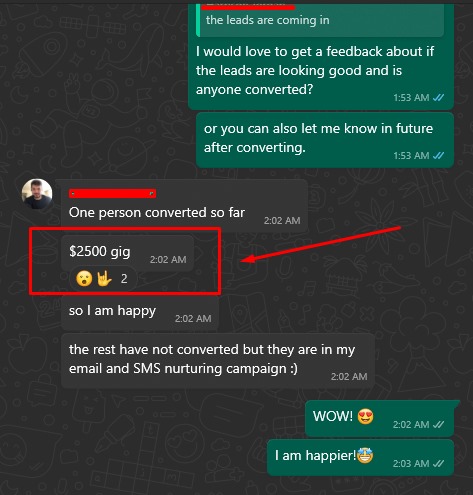
    If one gig is valued at $2500, you can easily think of how much the ROAS was.


    Conclusion

    This campaign proved once again that with the right mix of strategic targeting, creative testing, and continuous optimization, even high-ticket industries like law can see excellent results from Facebook Ads. By systematically lowering the cost per lead from over $100 to just $20–$28, we demonstrated the power of data-driven marketing. The journey wasn’t effortless, but the outcome speaks for itself: high-quality leads, consistent performance, and a solid path toward scalable client acquisition. 

    Ready to scale your law firm’s lead generation the smart way? Let’s book a meeting.

    Why our clients love
    working with us!

    Related Case Studies

    Ready to take your
    business to the next level?

    Methodology

    How we measure AI visibility

    What every number in Beaconly means, how it’s calculated, and where its limits are.

    Which AI we ask

    • Gemini, through Google’s official Gemini API. Right now Gemini answers from its own knowledge, without live web search, so answers don’t list sources.

    • Every question is asked as a fresh conversation, with no memory or personal history, set to the market (country) you chose.

    What we ask

    The questions a buyer would ask when looking for what you sell — like “best CRM for a small agency”. We write starter questions from your website; you can edit, delete or add your own. Questions don’t include your brand name, so we measure whether AI brings you up on its own.

    Mentioned

    Your brand counts as mentioned when its name, one of its other names you added, or its website address appears in the answer as a whole word. The same rule applies to every competitor, so the comparison is fair.

    Position

    The order in which tracked brands are first named in the answer: 1 means you were named before any tracked competitor. We show how often you’re named first, 2nd–3rd, later, or not at all.

    Recommended

    Mentioned and described positively. A separate AI step reads each answer and rates how it talks about each brand: positive, neutral or negative.

    Visibility and small samples

    Visibility is the share of answers that mention you. With fewer than 20 answers a percentage can mislead (1 answer changes it by 20 points), so we show the count instead — for example “3 of 5”.

    Perception scores

    We ask the AI to compare you with your competitors on the traits you choose, then score what the answer says about each brand from 1 to 10, using only the answer — not our own opinion. “What AI says about you” groups the reasons AI recommends you, its criticisms, and who it prefers instead, counted across your latest tracked answers.

    Brand facts check

    We ask the AI about your brand directly and compare each factual claim with the facts you gave us. Claims your facts don’t cover are marked “not covered”, never “wrong”.

    AI traffic

    The snippet on your site counts visits whose referrer is an AI assistant (ChatGPT, Perplexity, Gemini, Copilot, Claude and others), or that carry ChatGPT’s utm_source tag. Some apps hide the referrer, so the real number is usually higher. No cookies are used and no IP addresses are kept.

    Page watch

    We re-read the pages you watch once a day and look for your brand name, other names, or website address in the page text. Some sites block automated visits; we tell you when we can’t read a page.

    Answers vary

    AI assistants give different answers to the same question, and API answers can differ from what a signed-in person sees in the app (memory, location, model updates). That’s why we track over time and link every question so you can ask it yourself.

    Spotted something wrong?

    Email [email protected] with the page or brand, and we’ll look into it.